

Innovations
Photo Gallery
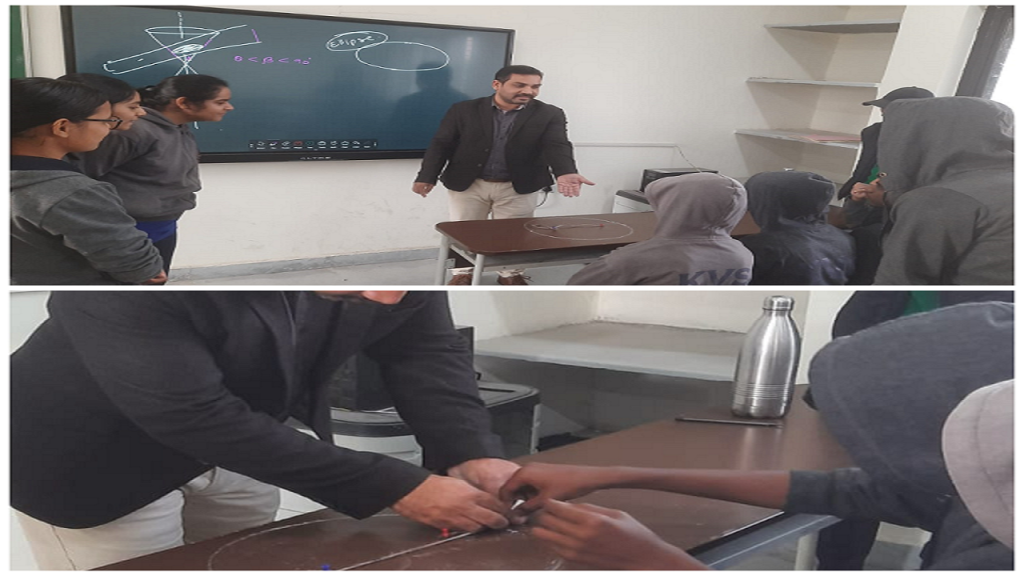
Experiential Learning in Mathematics: Bringing Abstract Concepts to Life
Teacher: Manoj Sarwan, PGT Mathematics
School: Kendriya Vidyalaya NPGC Nabinagar, Aurangabad, Bihar
Learning Mathematics Through Real-Life Experiences
At Kendriya Vidyalaya NPGC Nabinagar, Mathematics is taught not merely as a subject of formulas and equations but as a field of exploration, creativity and practical experience. Mr. Manoj Sarwan, PGT Mathematics, adopts innovative, activity-based and experiential teaching-learning strategies to make abstract mathematical concepts meaningful, engaging and easier to understand.
1. Experiential Learning in Three-Dimensional Geometry
Three-dimensional geometry involves abstract concepts that students often find challenging to visualize. To overcome this difficulty, students are provided with opportunities to experience these concepts practically through real-life demonstrations and physical activities. By relating mathematical ideas to directions, spatial relationships and real-world situations, students develop a better understanding of three-dimensional space and its geometric properties. This approach promotes spatial visualization, logical reasoning and conceptual clarity.
2. Constructing and Understanding an Ellipse Through Practical Activity
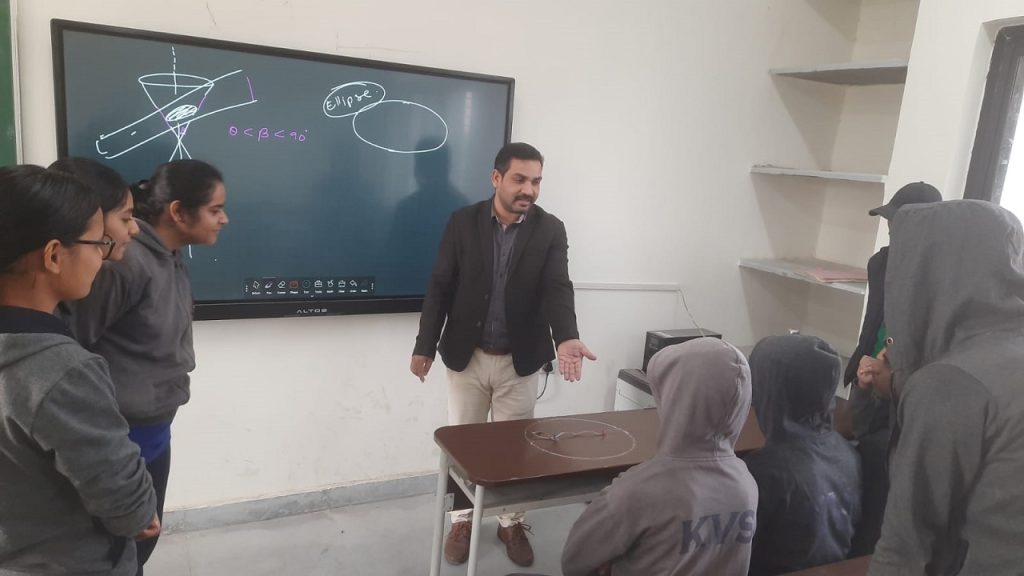
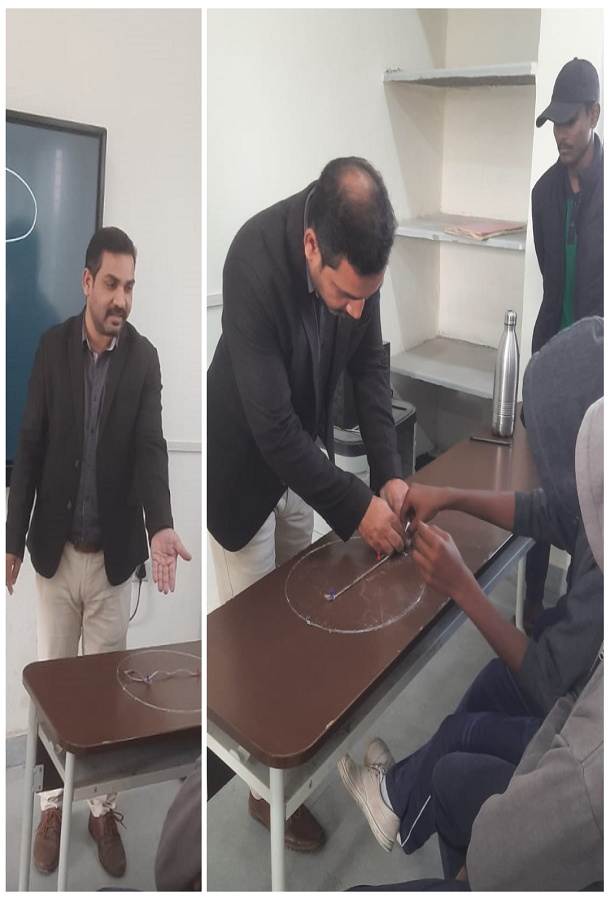
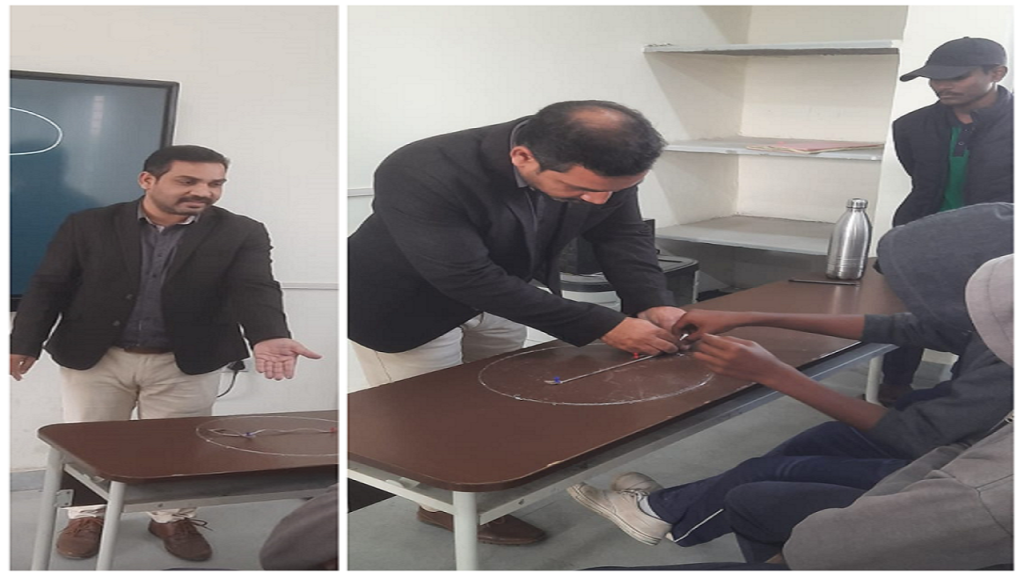
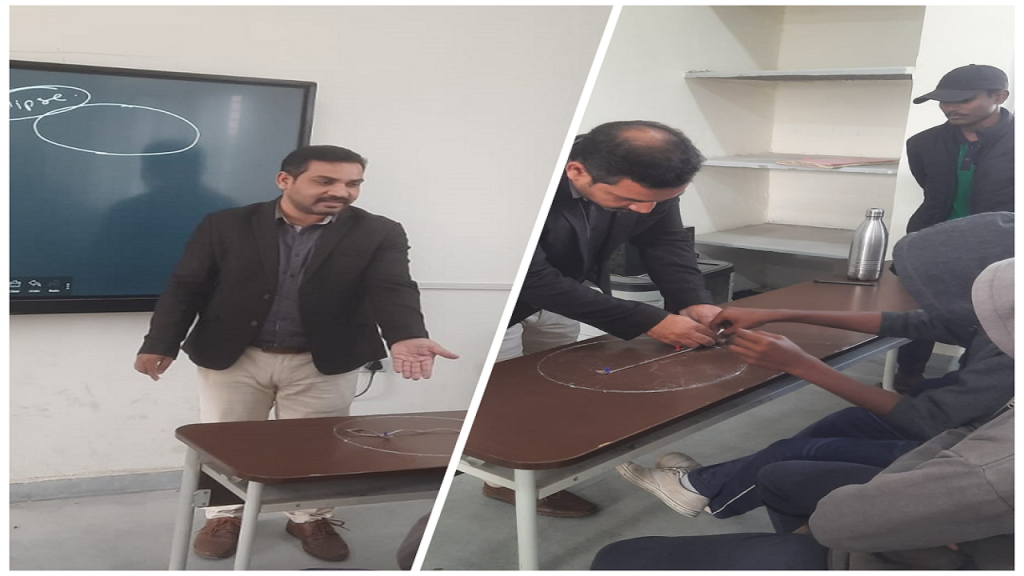
To make the concept of an ellipse more intuitive, students were actively involved in constructing an ellipse using a practical, hands-on activity. Through this process, they explored how an ellipse is formed and understood its definition and fundamental properties through direct observation and experience. Instead of relying solely on textbook diagrams, students experienced the geometric meaning of an ellipse and connected its practical construction with its mathematical definition and related concepts. This activity helped bridge the gap between theoretical knowledge and practical understanding while encouraging curiosity, participation and mathematical reasoning.
Impact on Teaching and Learning
These experiential learning practices help students:
1. Understand abstract mathematical concepts through concrete experiences.
2. Develop spatial visualization, logical reasoning and problem-solving skills.
3. Connect mathematical definitions, properties and equations with practical demonstrations.
4. Participate actively in the learning process and build confidence in Mathematics.
5. Develop curiosity, creativity and a deeper appreciation of the subject.
Conclusion
Through such innovative classroom interventions, Mathematics becomes an engaging journey of discovery rather than a process of memorizing formulas. These practices reflect the spirit of NEP 2020 by emphasizing experiential learning, conceptual understanding and competency development. The guiding principle is simple: When students experience a mathematical concept, they do not merely learn it—they understand it, visualize it and remember it.